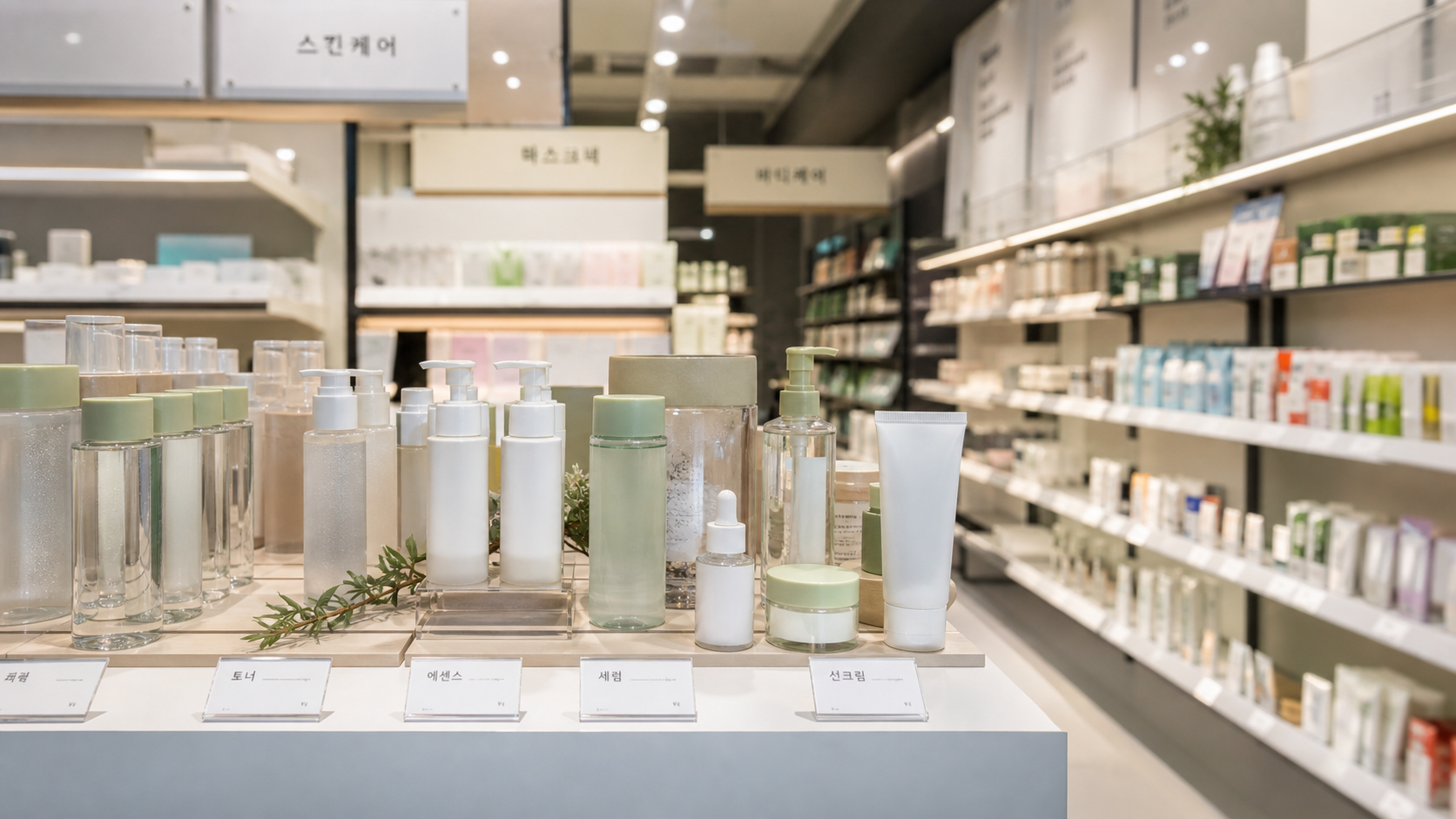
Simple Korean skincare order: In the morning, use a gentle cleanse or rinse, moisturizer, and sunscreen. At night, remove makeup or sunscreen, cleanse gently, and moisturize. A toner, essence, or serum is optional between cleansing and moisturizer. Beginners do not need ten products.
KoreaDecoded exists for the moment when a global reader is staring at a shelf of Korean skincare and thinking, “Do I really need all of this?” Usually, no. This guide keeps the routine practical: understand the order, start small, and avoid buying products just because the internet made them sound essential.
Beginner morning and night routine
| Time | Basic order | Optional step |
|---|---|---|
| Morning | Gentle cleanse or rinse → moisturizer → sunscreen | Hydrating toner, essence, or serum before moisturizer |
| Night | Remove makeup or sunscreen → gentle cleanser → moisturizer | One treatment or hydrating step before moisturizer |
If you wear water-resistant sunscreen or makeup, compare cleansing oil and cleansing balm before adding a first cleanse. For the last step, use the Korean moisturizer guide by skin type. Add products one at a time so you can tell what your skin tolerates.
What a Korean skincare routine is actually trying to do
The popular idea of a Korean skincare routine comes from how K-beauty content talks about layers, textures, hydration, and daily consistency. For beginners, the point is not to own more products. It is to understand why each product is there.
That means a beginner does not need to copy a complicated routine. A small routine that you can repeat safely is more useful than a shelf full of products you do not understand.
The beginner version: cleanse, hydrate, moisturize, protect
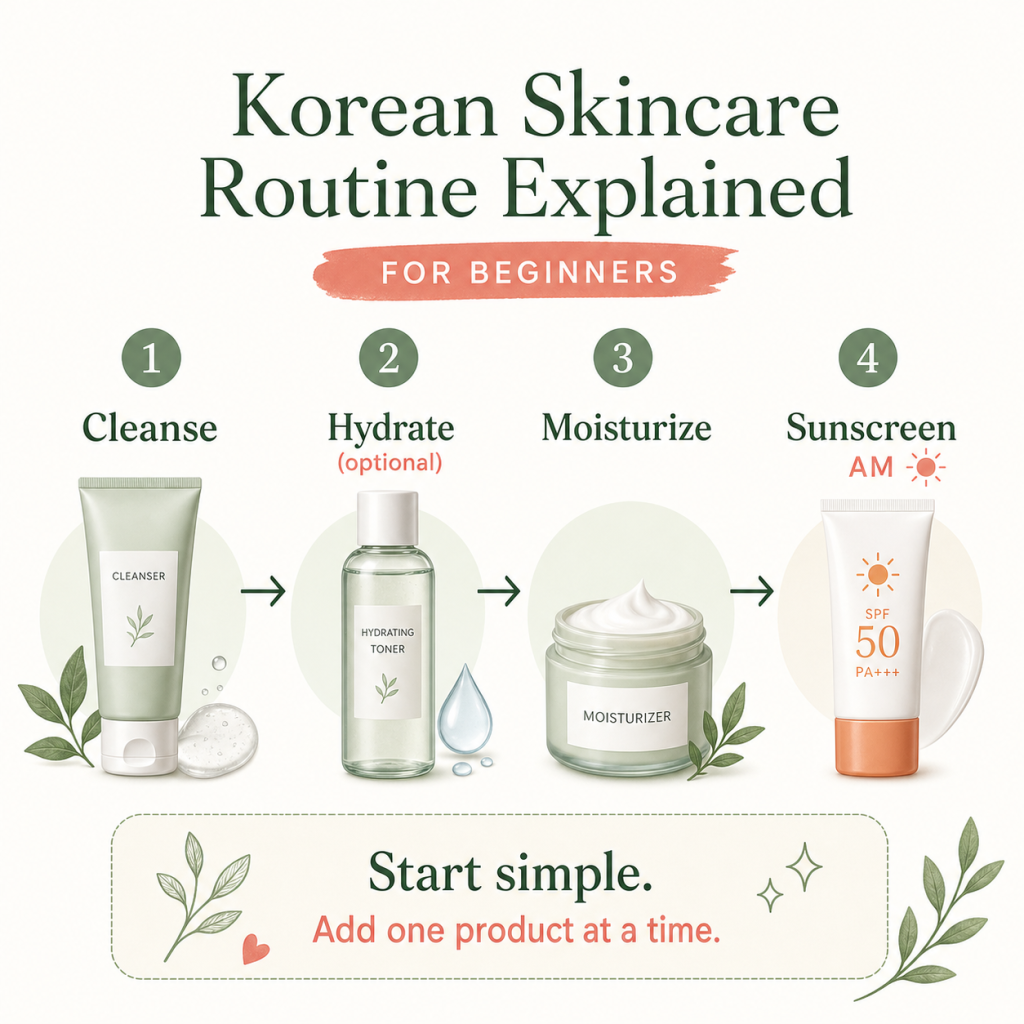
- Cleanse: Remove sunscreen, makeup, sweat, and daily buildup without stripping your skin.
- Hydrate: Use a toner, essence, or serum only if it adds comfort and does not irritate your skin.
- Moisturize: Seal in comfort with a cream, gel, or lotion that fits your skin type.
- Protect: In the morning, sunscreen is the step that matters most for daytime protection.
This is enough for many beginners. Optional steps can come later after you understand what your skin tolerates.
Optional steps and when to skip them
Essences, ampoules, exfoliants, sheet masks, and sleeping packs can be useful for some people, but they are not required for a routine to be “Korean.” Skip optional products when your skin feels irritated, when you cannot explain why you are using them, or when you are adding several new products at once.
Add one product at a time. Boring? Maybe. Useful? Very. If a product stings, burns, or causes persistent discomfort, stop using it and consider asking a qualified professional.
Why the famous 10-step idea is often misunderstood
The “10-step routine” became famous because it made Korean skincare feel structured and distinctive. But as a beginner rule, it can be misleading. More steps do not automatically mean better skin, and using many active or fragranced products can make it harder to know what is helping or hurting.
The real lesson is not “ten steps.” It is knowing why each product is there. If you cannot explain the step, you probably do not need to add it yet.
How to build a small routine without overbuying
Start with three questions. First, what do you already use without problems? Second, what one issue are you trying to improve in a non-medical way, such as dryness or comfort? Third, can you use the product consistently without irritation?
For a simple starter routine, choose one cleanser, one moisturizer, and one sunscreen. Add a hydrating toner or serum only after the basics feel comfortable. This keeps the routine easier to evaluate and avoids turning skincare into a shopping race.
Use simple buying rules at first. Choose a cleanser that leaves your skin comfortable — if it feels tight after washing, you may need something gentler. Choose a moisturizer texture you will actually use — if your skin feels oily by midday, a gel or lotion often works better than a heavy cream. Choose a sunscreen you can apply every morning without hating it. If you are not sure, avoid buying multiple “active” products at once.
Beginner routine check before buying more
- Can you explain what each product does in one sentence?
- Have you used the basics long enough to know what your skin tolerates?
- Are you adding only one new product at a time?
- Is the product solving a comfort or routine problem, not just following a trend?
Before buying the next product, pause at the label. The useful question is not “Is this popular?” It is “Do I understand what this product is, how to use it, and why it belongs in my routine?” Next, read how to read Korean skincare labels before comparing too many products.
Safety notes: patch testing, irritation, and medical concerns
Cosmetics can support cleansing, moisturizing, and appearance, but they should not be treated as medical treatment. Avoid claims that a routine will cure acne, eczema, pigmentation, or other skin conditions. For persistent or painful skin problems, get professional medical advice.
Patch testing is also sensible when trying something new. Use caution with exfoliating acids, retinoid-like products, strong fragrance, and products that promise dramatic changes. The safest beginner routine is usually boring, repeatable, and easy to understand.
Next in K-beauty
If the routine order makes sense now, continue with how to read Korean skincare labels. It helps you check product type, usage, cautions, and dates before buying.
FAQ
Do I need ten steps?
No. A beginner can start with cleanser, moisturizer, and daytime sunscreen. Extra products should have a clear purpose.
Is Korean skincare only for one skin type?
No. The routine idea is flexible, but individual products still need to match your skin, climate, and tolerance.
Sources and editorial notes
- Ministry of Food and Drug Safety: Regulations on the Demonstration of Labeling and Advertisement for Cosmetic Products was used as a claim-safety guardrail against exaggerated cosmetic advertising.
- Google Search Central: Creating helpful, reliable, people-first content was used as the editorial baseline for avoiding thin, search-first automation.
Before buying a full routine in Korea, use the Korean shopping phrase guide to ask for recommendations, skin-type help, and receipts without overexplaining.