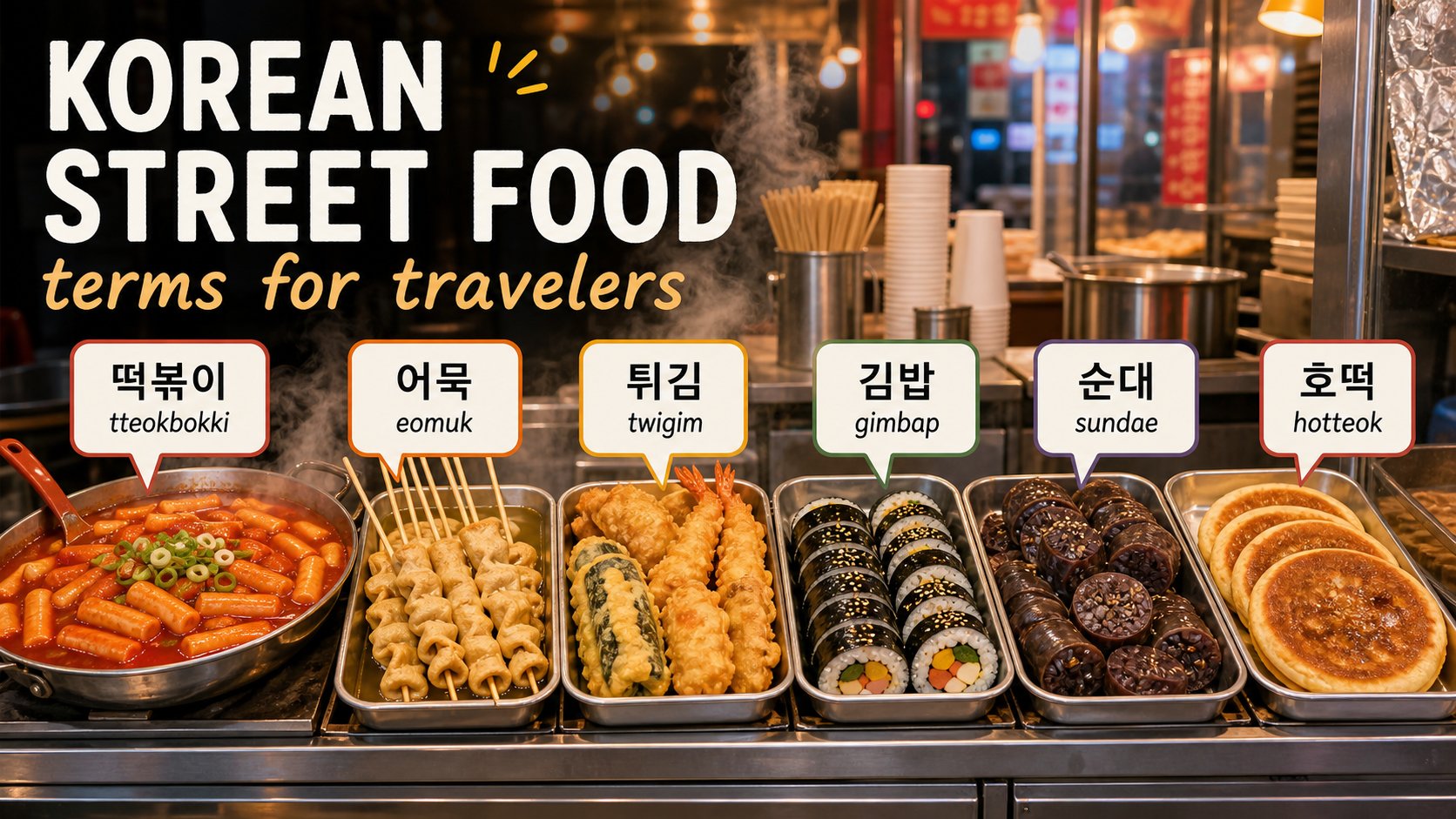
Short answer: If you learn a few Korean street food words before your trip, menus start to feel less chaotic. Start with bunsik, tteokbokki, eomuk, twigim, gimbap, sundae, and hotteok. These words will not explain every ingredient, but they give you a useful first map of what is in front of you.
A Korean street food stall can feel fast: steam, sauce, people ordering, Hangul signs, and very little time to calmly decode a menu. KoreaDecoded’s goal here is not to make you a food expert overnight. It is to help you recognize the basics before you point, pay, and hope for the best.
What does bunsik mean?
Bunsik is a useful umbrella word for casual Korean snack food. It often points to the kind of quick, affordable dishes sold at small restaurants, market stalls, and snack shops: spicy rice cakes, fish cake skewers, fried snacks, rice rolls, and other easy meals.
Think of bunsik as the category, not one single dish. If you see 분식집 / bunsikjip on a sign, expect a casual snack restaurant rather than a formal sit-down meal. Red sauce, skewers, fried food, rice rolls, and quick seating are all good clues.
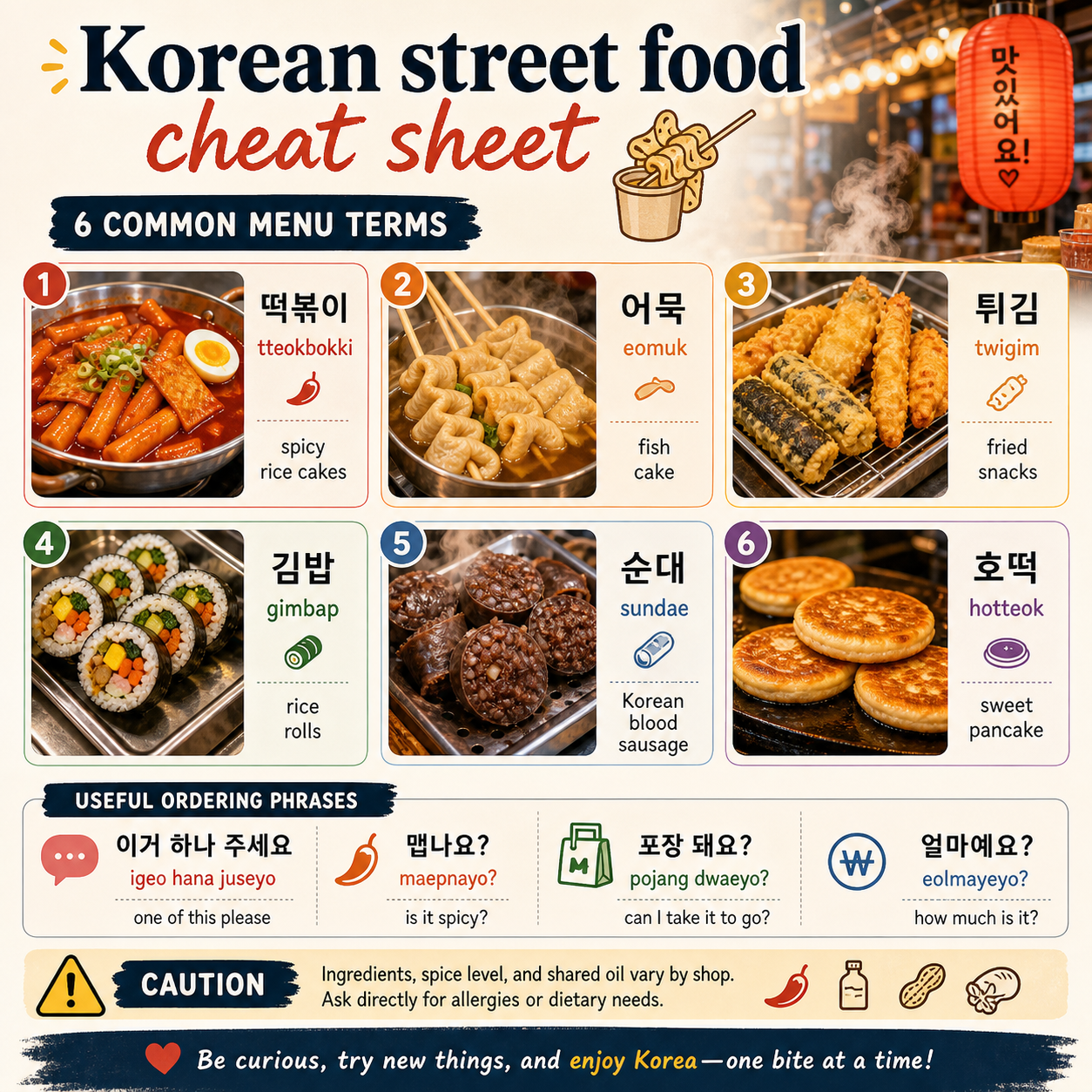
Start with these six menu words
- 떡볶이 / tteokbokki: chewy rice cakes usually served in a red sauce. It is often spicy, but the exact heat and sweetness vary.
- 어묵 / eomuk: fish cake, often served on skewers in warm broth. If you avoid seafood, do not assume this is suitable.
- 튀김 / twigim: fried items. The exact filling can vary, and shared oil is common at casual stalls.
- 김밥 / gimbap: seaweed rice rolls with fillings. They look simple, but fillings differ by shop.
- 순대 / sundae: Korean blood sausage. It is not a dessert despite the English spelling looking similar to “sundae.”
- 호떡 / hotteok: a sweet filled pancake, usually eaten as a snack. It can be very hot inside when fresh.
Words that help you order without freezing
You do not need perfect Korean to buy a snack. A few short phrases can make the moment easier.
- 이거 하나 주세요 / igeo hana juseyo: one of this, please.
- 맵나요? / maepnayo?: is it spicy?
- 포장 돼요? / pojang dwaeyo?: can I take it to go?
- 얼마예요? / eolmayeyo?: how much is it?
Pointing is normal at busy stalls. The goal is not a flawless sentence. The goal is a clear order.
Spice, texture, and sharing: what travelers should notice
Korean street food is often about texture as much as flavor. Tteokbokki is chewy. Twigim is crisp when fresh. Eomuk is soft and warm. Hotteok is sweet, soft, and sometimes messy. Small details like that matter because the English translation rarely tells the whole story.
Spice is also not one fixed setting. A red sauce can be mild, sweet, sharp, or properly hot depending on the stall. Ask maepnayo? if spice matters to you, and start with a smaller portion when you are unsure.
Dietary and allergy caution
Do not treat this guide as allergy, halal, vegetarian, vegan, or food-safety confirmation. Ingredients, broths, fillings, sauces, and shared cooking oil can vary by shop. If a dietary requirement matters, ask the seller directly before ordering, and be ready to skip the dish if the answer is unclear.
That sounds cautious because it should be. A vocabulary guide can help you recognize food words. It cannot verify a kitchen.
Quick checklist before you order
- Can I identify the main dish word on the sign or menu?
- Do I need to ask whether it is spicy, seafood-based, meat-based, or fried in shared oil?
- Can I order one small portion first instead of buying too much?
- Do I know whether I want to eat there or take it to go?
- If the answer about ingredients is unclear, am I comfortable choosing something else?
FAQ
Is all tteokbokki very spicy?
No. It is often spicy, but heat level varies. Some versions are sweeter or milder, and some are much hotter than they look.
Is eomuk vegetarian?
Usually no. Eomuk is fish cake, and the broth may also contain seafood ingredients. Ask directly if this matters to you.
Can I just point at the food?
Often, yes. At busy stalls, pointing plus a simple phrase like igeo hana juseyo can be enough for a basic order.
Sources
For sit-down grill meals rather than street stalls, start with the Korean BBQ etiquette guide.
If you are moving from street stalls to restaurants, the Korean restaurant menu words guide explains the menu words that change your order.
If you are deciding what Korean street food to try first, start with the tteokbokki taste and ordering guide before choosing spicy rice cakes.