Korean language and culture words explained
Understand Korean words that travel through K-pop, K-drama, subtitles, social clips, food stalls, beauty shopping, and everyday culture.
The goal is not to copy phrases blindly. KoreaDecoded explains what a word is doing, when context matters, and when not to use it.
Start here

What does aegyo really mean in Korea?
Use this if you have seen aegyo in fan edits, subtitles, dramas, or variety clips and want the context before repeating the word.
Useful next paths
- Learn Korean street food terms for words you may see on menus and signs.
- Read Korean skincare labels if shopping terms are the problem.
Beginner path
- Start with one word and its context.
- Check whether the word is descriptive, performative, casual, or sensitive.
- Look for relationship, tone, and setting before using it yourself.
- Move from culture words into food, beauty, and travel terms as needed.
Latest Korean language guides
-
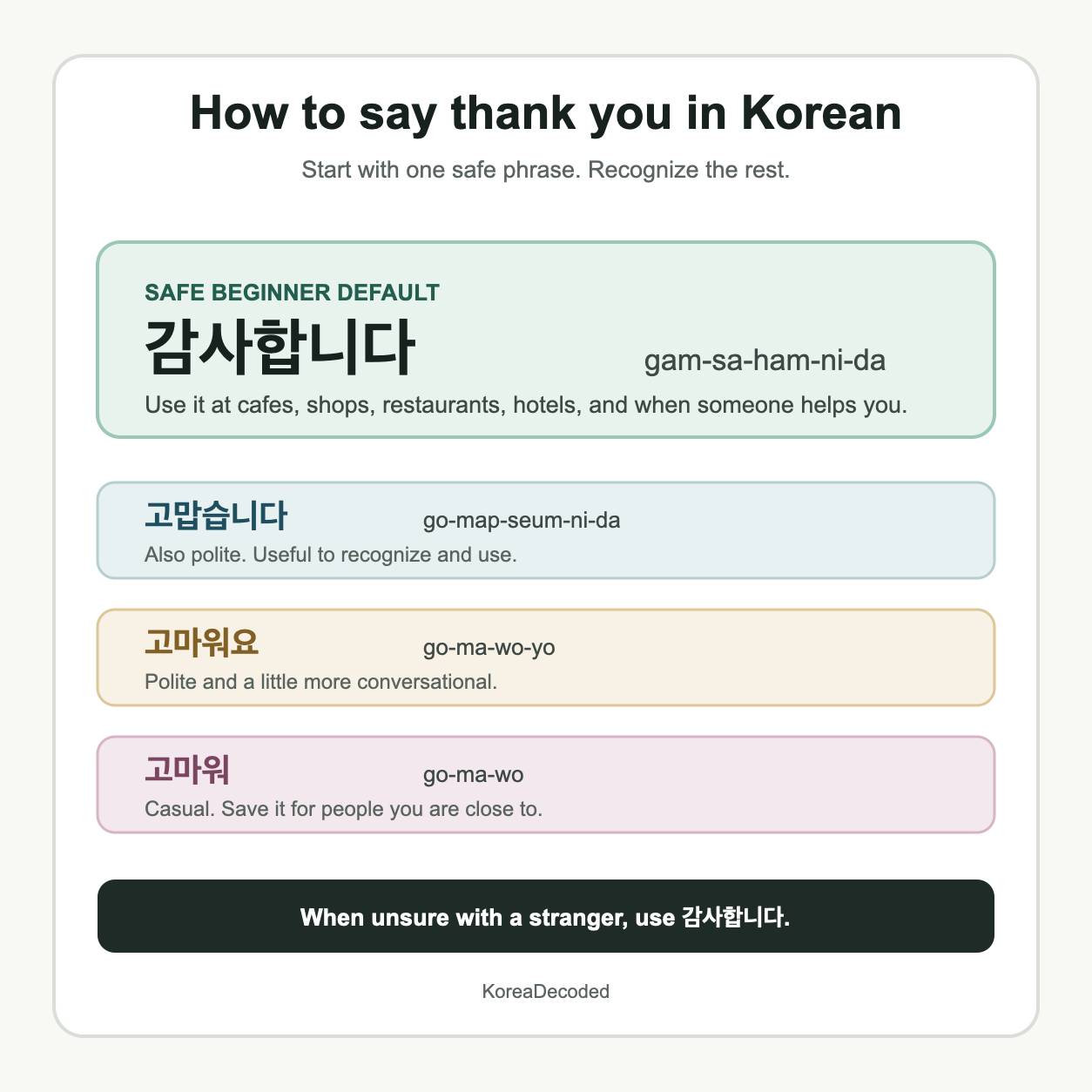
How to say thank you in Korean: polite phrases travelers can actually use
A practical beginner guide to 감사합니다, 고맙습니다, 고마워요, and 고마워: which Korean thank-you phrase travelers should use and when.
-
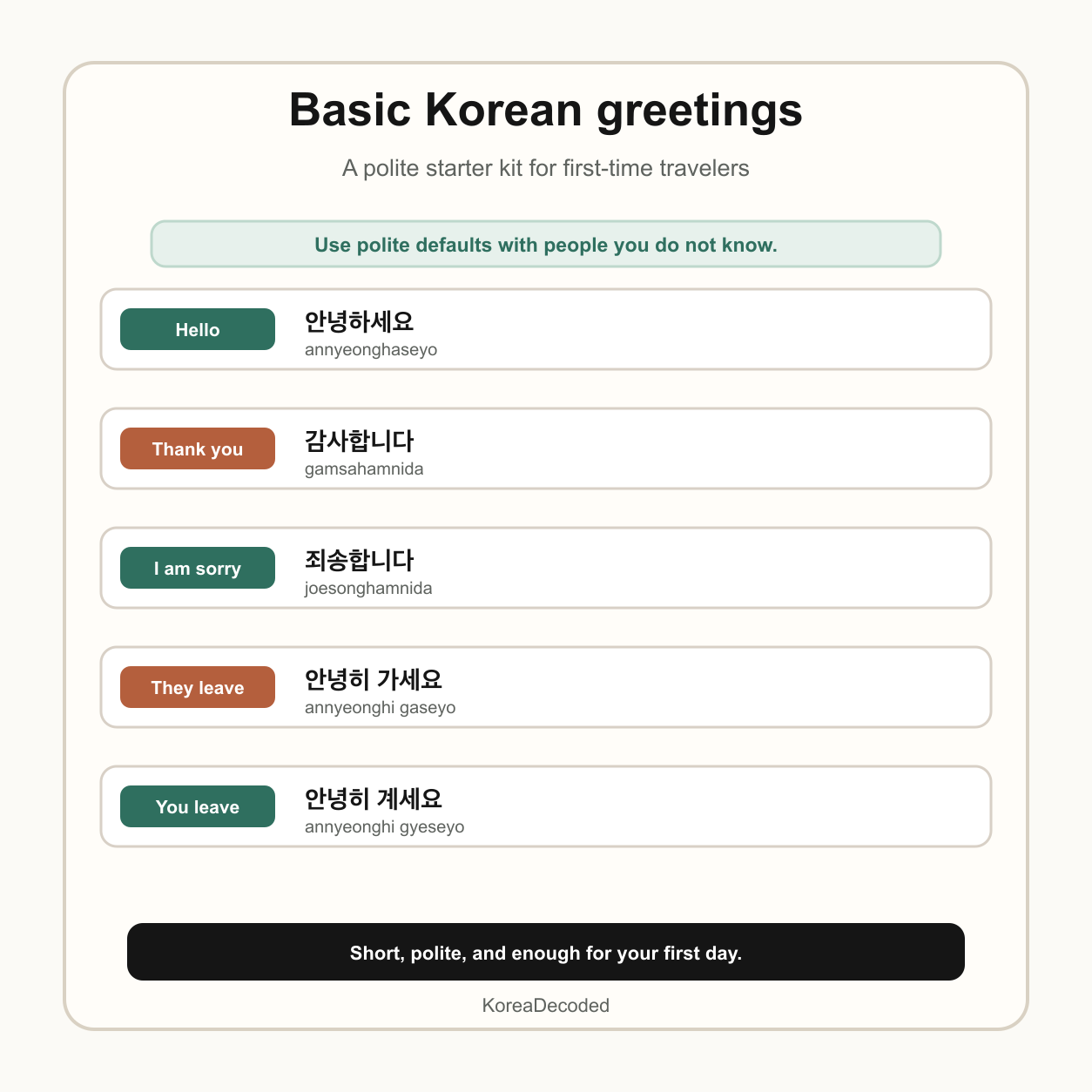
Basic Korean greetings travelers should actually use
A polite Korean starter kit for first-time travelers: hello, thank you, sorry, goodbye, yes, and no without grammar overload.
-

Aegyo meaning in Korean: what 애교 really means
Aegyo (애교) means cute charm or intentionally playful affection in Korean. Learn how it differs from ordinary cuteness, when people use it, and why context matters.