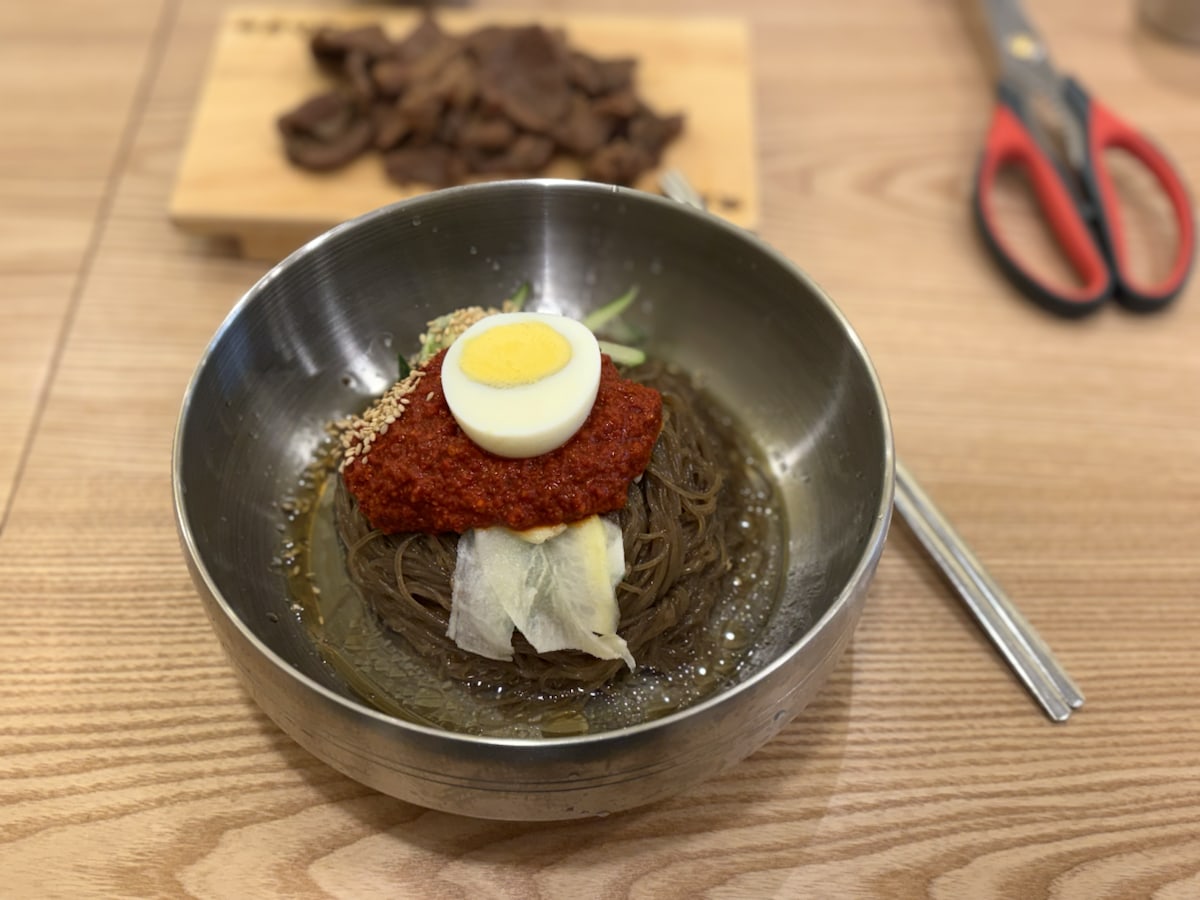
Korean cold noodles can look surprising the first time you see them. The bowl may arrive icy cold, the noodles may be extra chewy, and there may be scissors on the table before you even take a bite.
This guide explains naengmyeon for first-time visitors: what the main styles mean, how to choose between broth and spicy versions, and how to eat it without feeling lost.
The photos in this article are from a real Hwagok Station Yookssam Naengmyeon meal. Use them as a practical example of one cold-noodle format, not as a guarantee of current price, exact menu, opening hours, or branch rules.
What is naengmyeon?
Naengmyeon means cold noodles. In Korean menus, you may see it written as 냉면. The noodles are usually long and chewy, and they are served cold with broth, sauce, or both.
The dish is especially refreshing in hot weather, but it is not only a summer food. It also works well after barbecue or grilled meat because the cold, sharp flavor cuts through a heavy meal.
For travelers, the important point is not memorizing every regional style. The important point is knowing whether you want a cold broth bowl, a spicy mixed bowl, or a meat-plus-noodle set.
Mul-naengmyeon vs bibim-naengmyeon
Most first-time visitors should start with these two menu words:
- 물냉면 / mul-naengmyeon: cold noodles in chilled broth. Usually the safer choice if you want something refreshing and less spicy.
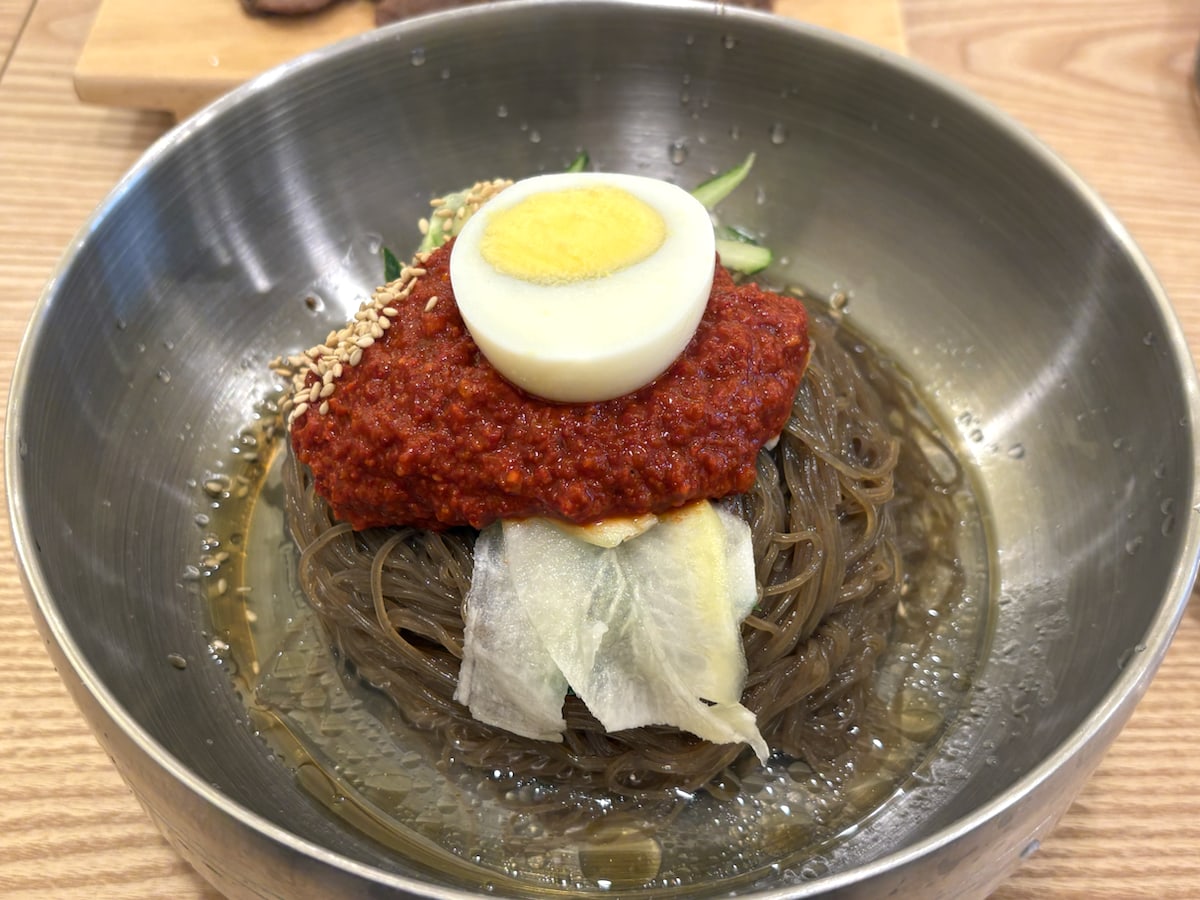
- 비빔냉면 / bibim-naengmyeon: cold noodles mixed with a red spicy sauce. Better if you want stronger flavor and can handle spice.
Some bowls sit between the two. You may see spicy sauce on top while there is still a little broth or ice in the bowl. If you are sensitive to spice, do not assume “cold” means mild.
What comes in the bowl?
A typical cold noodle bowl may include:
- Long chewy noodles: often made with buckwheat, potato starch, sweet potato starch, or a blend depending on the style.
- Cold broth or ice: especially in mul-naengmyeon.
- Red sauce: common in bibim-style bowls and sometimes added on top of broth-style bowls.
- Egg: often half a boiled egg on top.
- Cucumber or radish: crisp toppings that keep the bowl bright.
- Vinegar and mustard: often available at the table so you can adjust the flavor.
The texture matters. Naengmyeon noodles can be much chewier than the wheat noodles many visitors expect. That is part of the point, not a mistake.
Why are there scissors?
Cold noodles can be long and springy. Restaurants may give you scissors so you can cut the noodles once or twice before mixing and eating.
You do not need to cut them into tiny pieces. One or two cuts are usually enough. If you are not sure, watch the people at your table or ask with a simple gesture toward the scissors and bowl.
What is yookssam naengmyeon?
You may also see the phrase 육쌈냉면, often romanized as yookssam or yukssam naengmyeon. The idea is cold noodles served with grilled meat, so you can eat the noodles and meat together.
This can be a very traveler-friendly format. You get a cold noodle bowl for refreshment and a small grilled-meat side for richness. If plain cold noodles feel too light for dinner, this style can feel more complete.
How to order without overthinking
- If you want refreshing and less spicy, choose mul-naengmyeon.
- If you want spicy and saucy, choose bibim-naengmyeon.
- If you want a fuller meal, look for yookssam or a meat set.
- Cut the noodles once or twice if scissors are provided.
- Mix first, taste second, then add vinegar or mustard only if you want more sharpness.
If you are ordering from a kiosk, look for the Korean words 물냉면 and 비빔냉면 first. Photos help, but they can make every bowl look similar, so the Korean word often matters more than the picture.
What to check before you go
- Spice level: bibim-style bowls can be hotter than they look.
- Meat set: not every cold noodle restaurant includes grilled meat.
- Broth style: some bowls are icy and brothy, others are mostly mixed sauce.
- Current branch details: confirm hours, price, and menu before going to a specific location.
- Seasonal rush: popular cold noodle places can be busier during warm months and lunch peaks.
For a first Korea trip, naengmyeon is worth trying because it feels very different from the hot noodle soups many travelers expect. Start with broth if you are cautious, choose bibim if you like spice, and choose a meat set if you want the safest full meal.
Useful links before you order
- What is donkatsu in Korea?
- What to eat in Hongdae on your first night
- How to book or join restaurant waitlists in Korea
- Maangchi: Naengmyeon
- Korean Bapsang: Mul Naengmyeon
- My Korean Kitchen: Bibim Naengmyeon
If you are comparing noodle choices, the Korean restaurant menu words guide helps you recognize noodle, soup, stew, and spice clues.
If spicy rice cakes sound too intense, compare them with the tteokbokki guide and a colder noodle option before ordering.